A summer designing at enterprise scale.
- Role
- Product Design Intern
- Team
- Core Software Data Design
- Location
- Austin, Texas
- Duration
- 12 weeks
How does a product teach both people and agents?
IBM Db2 · Product Documentation
Most of my summer went to exploring product guidance in IBM Db2, looking at how both people and AI agents learn to use complex products.
The work took me through research, exploration, prototyping, and plenty of playbacks with the team. I can’t share the details publicly, but it shaped a lot of how I think about AI, agents, and the future of product guidance.
Want to hear more? I can talk through the project, my process, and my contributions during an interview.
Then came a side mission.
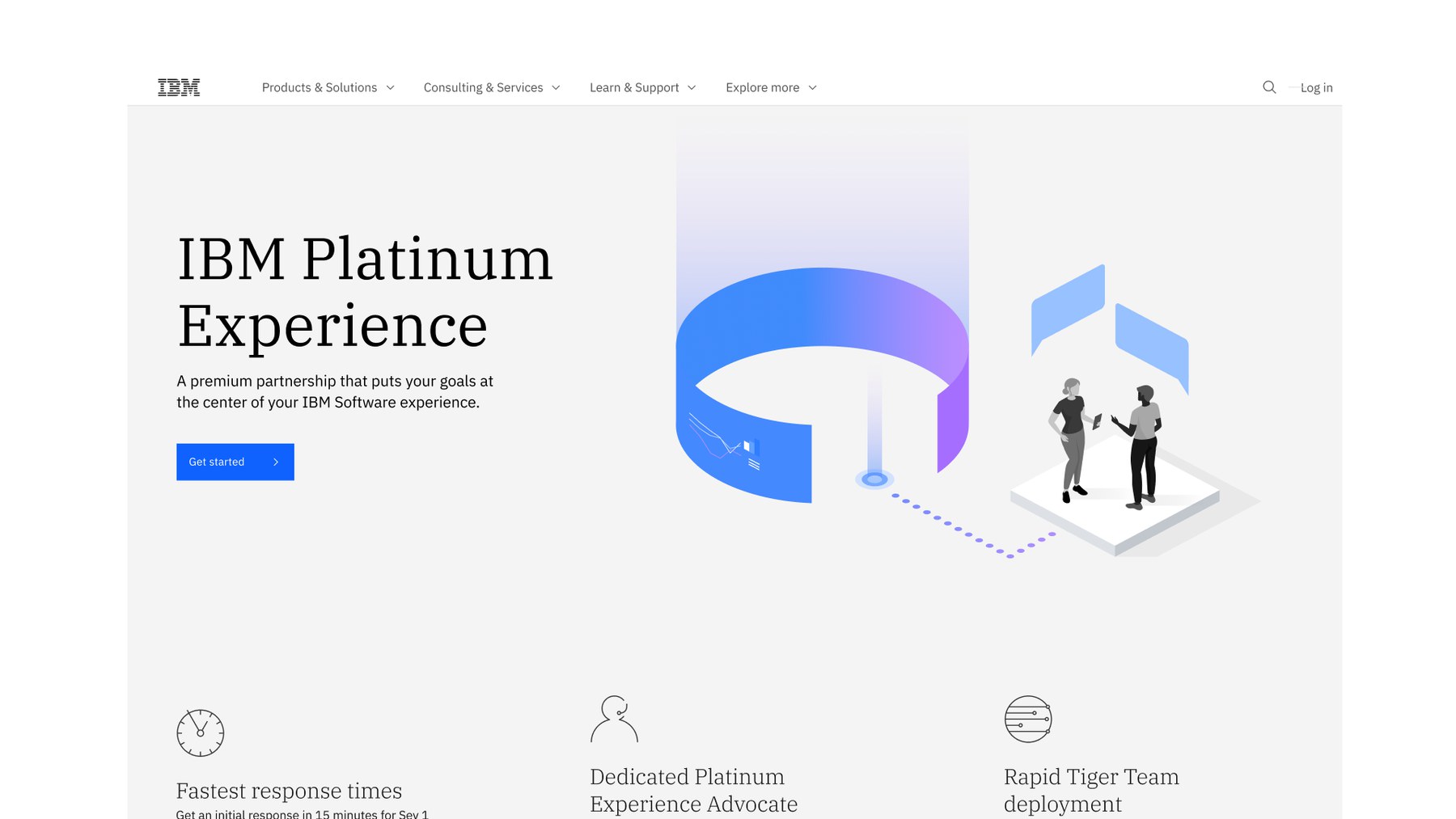
Near the end of my internship, my manager asked whether anyone had time to help redesign three IBM Support pages that weren’t showcasing the offerings well. I said yes.
Ask on Thursday. Presenting on Friday.
IBM Sovereign Support · Design + Build
4 PM Thursday 10 AM Friday
- Ask
- Design
- Build
- Present
I took my pages from design to build—starting in Figma, then using IBM Bob to help translate the designs into code. The pages run on Drupal, which set most of the constraints we designed inside.
The goal was to take a complex support offering and make it easier for customers to understand what it is, why it matters, and how to get started.
That first version kept evolving, and the experience is now live on IBM.com. I also contributed to another support offering experience.
“Your contributions helped us transform ideas into modern, polished web experiences that better showcase the value of our offerings.” Pepe Valiente Strategy Lead, IBM Core Software
“Your quick turnaround with the initial drafts and subsequent update requests allowed us to publish these sooner than we would have.” Patti McAuliffe WW Support Planning, IBM Core Software
What I took with me.
I came to IBM wanting to understand what product design looked like at enterprise scale.
I left more comfortable working inside complexity, sharing unfinished work, designing within constraints, and knowing when to keep exploring versus when to make something real.
I also learned to say yes when something interesting comes up. Sometimes that means weeks exploring a complex product problem. Other times it means raising your hand at 4 PM and having something to show by 10 the next morning—without working all night to get there.
And I left with a question I’m still thinking about:
If products are learning to work with us, how should we design the way they learn?
12 weeks, a lot of questions, and a much better idea of the kind of designer I want to be.